
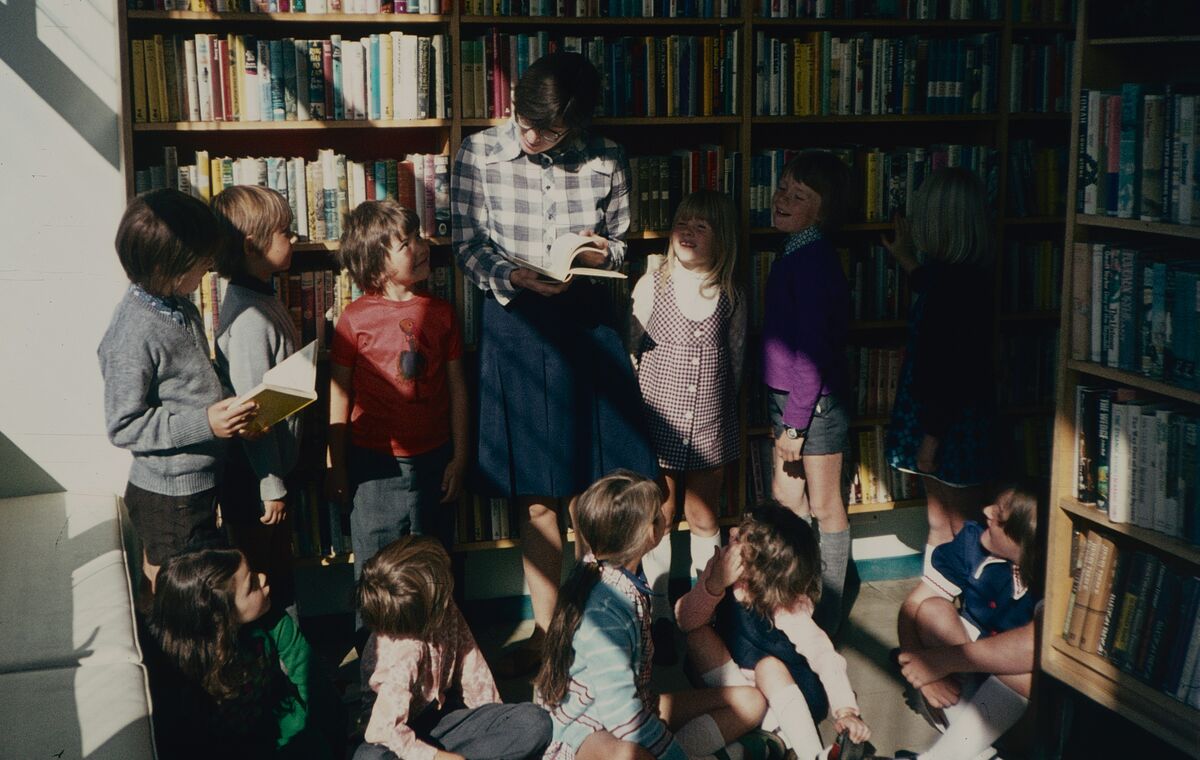
This week Education Week published a special report with a blunt premise: fewer children are reading for pleasure, and teachers are struggling to get students to read at school and at home. The federal numbers behind that worry are stark. In June, NBC News reported that the share of 9-year-olds who read for fun almost every day fell from 53% in 2012 to 37% in 2025, based on long-term trend data from the National Center for Education Statistics (NCES). For most families that's a concern. For families of children with dyslexia, it's a familiar one with a twist: the children who find reading hardest are the least likely to pick up a book by choice. Here's what the research says and what helps.
How much has reading for fun declined?
- United States: 37% of 9-year-olds read for fun almost daily in 2025, down from 53% in 2012, and the share of 13-year-olds reading for fun has fallen by nearly half since 2012, NBC News reported from NCES data covering more than 30,000 students. "This isn't just a pandemic story," acting NCES commissioner Matthew Soldner said.
- United Kingdom: The National Literacy Trust's 2026 survey of 125,375 children and young people found 36.1% of 8- to 18-year-olds enjoy reading in their free time, up from a 20-year low of 32.7% in 2025 but still well below a decade ago. Enjoyment among 5- to 8-year-olds dipped to 61.6%, driven by boys.
- In classrooms: A 2024 EdWeek Research Center survey found more than half of educators said reading stamina in grades 3–8 had dropped since 2019, Education Week's Sarah Schwartz reports.
Why does it matter so much for children with dyslexia?
Reading for pleasure generally goes along with higher reading scores, NBC News notes. But the arrow points both ways: children who read more get better, and children who read well read more. Researchers sometimes call this a "Matthew effect," where early gaps widen over time. A child with dyslexia who spends every reading moment decoding word by word gets less vocabulary, less background knowledge, and less fun from books than classmates do. Over years, that can turn a decoding difficulty into a broader knowledge gap and a belief that "reading isn't for me." The goal isn't to force more minutes of struggle. It's to protect the child's access to stories and ideas while their decoding catches up.
What counts as reading for a dyslexic child?
We've taken a consistent position on this site: screens and audio are for access, not for teaching reading foundations. That distinction is the key to rebuilding a reading habit. Listening to an audiobook isn't decoding practice, and researchers like Deborah Reed of the University of Tennessee point out in Education Week that listening comprehension and reading comprehension aren't the same thing. But for a dyslexic child, an audiobook is often the only way to experience a book at their thinking level. It builds vocabulary, background knowledge, and the identity of someone who loves stories. Decoding is built separately, through explicit teaching and practice with text the child can actually read.
How can families rebuild a reading habit at home?
- Keep a daily read-aloud. Read to your child, at any age, from books above their decoding level. Our guide to the daily read-aloud habit explains why it matters most for struggling readers.
- Add audiobooks with the print book open. Following along in print while listening connects spoken words to written ones. Free options are in our audiobook access guide.
- Make independent reading short and successful. Five to ten minutes with a decodable or truly easy book beats 30 frustrated minutes. Success is the motivator.
- Let your child choose. Graphic novels, joke books, manuals, and magazines all count. Interest drives effort, and motivation research shows children read more when reading connects to their lives.
- Make it social. Take turns reading pages, talk about the story, or listen to the same audiobook in the car. Education Week's reporting on communal reading found shared, discussed reading helps reluctant middle schoolers.
- Protect the habit from homework. Keep at least one reading time a day that isn't graded, logged, or timed.
What should families avoid?
- Reading logs as punishment. Minute-counting can make reading feel like a chore, especially when every minute is hard.
- Only "at-level" books. A dyslexic child's thinking level is usually far above their decoding level. Feed both: easy text to practice, rich stories to enjoy.
- Calling audiobooks "cheating." They're access. Saying so out loud matters; children absorb the message.
- Assuming a reluctant reader is lazy. Avoidance is often a signal that reading is hard. If you're seeing it alongside other signs of dyslexia, ask the school about screening or an evaluation.
What are schools doing about it?
Education Week's report describes a mix: whole-class novels read together in Georgia middle schools, librarians in Clayton, Missouri, building a reading culture in elementary grades, reward programs, and partnerships with families. Its summary judgment is that a mix of modeling, teacher guidance, incentives, and parent involvement is most likely to help. Ask your child's teacher what the class does to build enjoyment, and whether struggling readers get access to grade-level books through audio or read-alouds. For a dyslexic child, both matter: intervention to build skills, and access to keep the love of books alive while the skills grow.
Is it too late if my child is already a teenager?
No. The federal data show the steepest drop among 13-year-olds, so you're far from alone, and older children often respond well to being treated as readers with real tastes. Offer audiobooks of books their friends are reading, nonfiction about their interests, or a shared series you both listen to. If your teen still struggles to decode, intervention works at any age, and access tools like text-to-speech keep schoolwork within reach in the meantime. Our guide to speech-to-text writing covers the writing side.
Frequently asked questions
Are children reading for fun less than before? Yes. Federal long-term trend data show 37% of US 9-year-olds read for fun almost every day in 2025, down from 53% in 2012, and the share of 13-year-olds has fallen by nearly half. UK surveys show a small 2026 rebound, but levels remain well below a decade ago.
Do audiobooks count as reading for children with dyslexia? Audiobooks don't build decoding skills, but they do build vocabulary, background knowledge, and enjoyment of books, which dyslexic children often miss. Use them for access alongside explicit reading instruction and short practice with decodable text. Following along in the print book while listening adds extra benefit.
How can I get my dyslexic child to enjoy reading? Separate enjoyment from decoding work. Keep daily read-alouds and audiobooks at your child's interest level, make independent reading short and successful with easy or decodable books, let your child choose topics and formats like graphic novels, and keep at least one reading time a day free of grades or logs.
Source: "Tackling the Decline in Student Reading" (Education Week special report, Oct 19, 2026) · "Getting Middle Schoolers to Do the Reading Is Hard. Can Communal Reading Help?" (Sarah Schwartz, Education Week, Oct 19, 2026) · "Reading for pleasure sharply down among schoolkids, Education Department report shows" (NBC News, Jun 10, 2026) · Children and young people's reading in 2026 (National Literacy Trust, Jun 10, 2026)