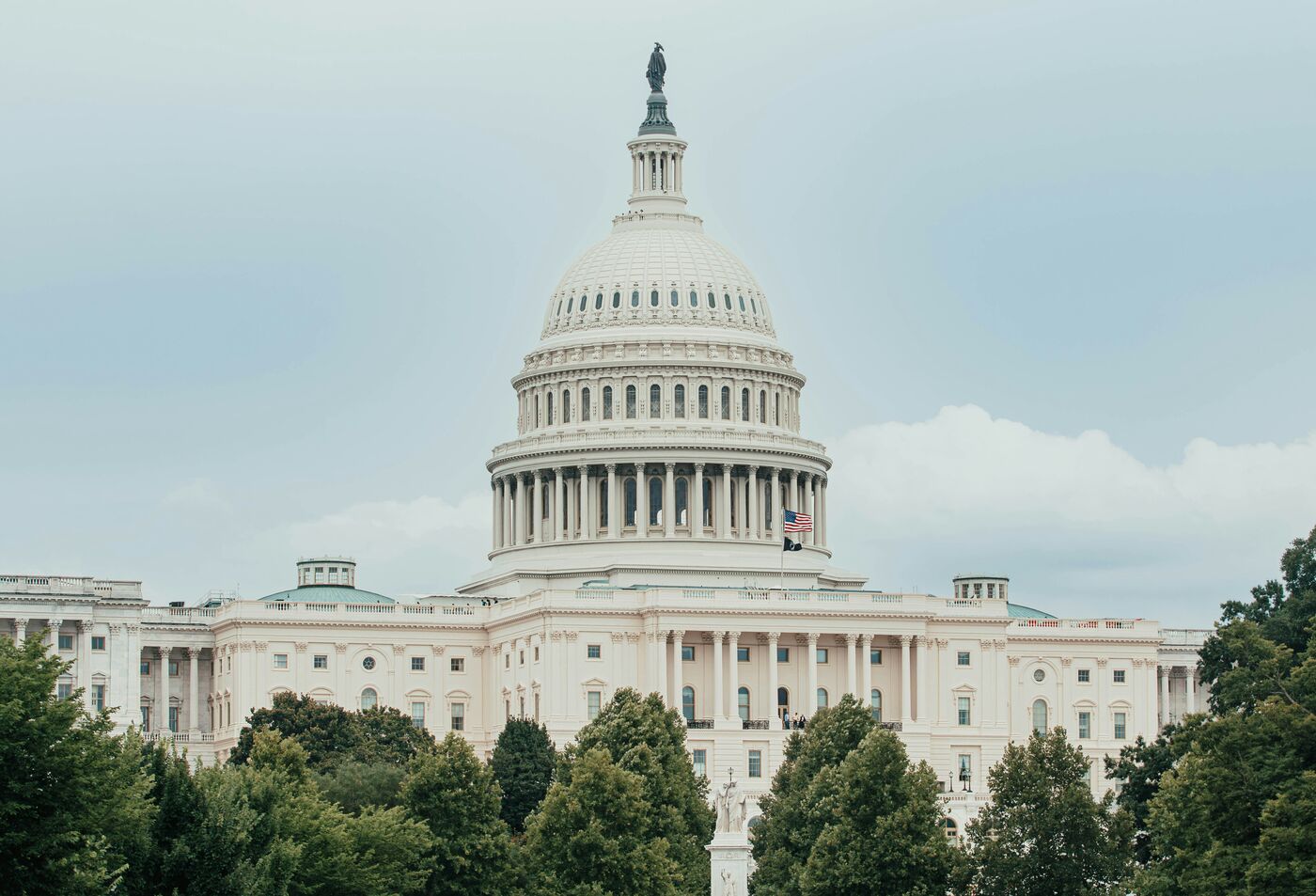
In July we explained what a federal science-of-reading bill would actually do if it ever moved. On Wednesday, September 16, it moved. The U.S. House of Representatives passed the Science of Reading Act of 2026 (H.R. 7890), a bipartisan bill led by Rep. John Mannion (D-N.Y.) and Rep. Erin Houchin (R-Ind.), with support from Rep. Kevin Kiley (R-Calif.). It is the furthest any federal legislation built around the science of reading has traveled. It is also narrower than some of the celebratory posts suggest. Here's the plain-language version: what passed, what it would change, what it would not, and how a parent of a struggling reader can use it this fall.
What did the House actually pass?
H.R. 7890 amends the Elementary and Secondary Education Act, the main federal K–12 law, to change one program: the Comprehensive Literacy State Development (CLSD) grants. According to Education Week, CLSD is a $194 million program currently serving 23 states. Under the bill, the U.S. Department of Education and the state agencies that pass the money along would have to prioritize applications aligned with the science of reading, and literacy instruction funded through the program would have to follow it. Rep. Mannion's office says the bill limits the three-cueing model (teaching children to guess words from pictures, context, and first letters) as the primary instructional approach, while protecting individualized supports for students with disabilities and English learners. The Reading League, which endorsed the bill, called House passage "a monumental step," in the words of its president and CEO, Dr. Maria Murray.
How does the bill define the science of reading?
This is the part worth reading twice. The bill's definition, as reported by Education Week, describes an interdisciplinary, evidence-based body of research that emphasizes phonemic awareness, phonics, fluency, vocabulary, and comprehension, and also background knowledge, oral language, the connections between reading and writing, and strong writing instruction. It has to explain reading difficulties, and it excludes three-cueing. That breadth matters for children with dyslexia. A phonics-only definition would have been easy to game ("we bought a phonics add-on") and easy to caricature. A definition that includes oral language and writing lines up with what structured literacy has always meant: explicit, systematic teaching of the whole reading and spelling system, not a worksheet of letter sounds.
What would it not change?
Quite a lot, and it's better to know that now than to be disappointed later.
- It is not a national curriculum. States and districts still choose programs. The bill shapes how one pot of federal money is spent.
- It does not reach every school. CLSD funds flow to participating states, then to subgrantees. A district outside that money is not directly bound.
- It does not change your child's special-education rights. Evaluation, IEP, and Section 504 protections come from separate laws and are unchanged. You don't need to wait for the Senate to request an evaluation.
- It is not law yet. The Senate still has to act. A companion bill, the READ Act, passed a Senate committee in July, and supporters hope for a vote before the session ends in December.
What could stall it?
Two things came up on the House floor. First, timing: a Congress running out of calendar may not reach a Senate vote. Second, capacity. Rep. Bobby Scott (D-Va.) warned during debate that efforts to dismantle the Department of Education could put federal literacy investments at risk, and Education Week noted that the cancellation of the Regional Educational Laboratory contracts has already disrupted the research support many states relied on for literacy work. A grant priority is only as strong as the office that reviews the grants. That's not a reason to dismiss the bill; it's a reason to watch implementation as closely as the vote, which is exactly the beat we cover (see our state-by-state laws guide for what is already binding where you live).
How can families use this news right now?
Federal bills move slowly. Your child's school year does not. The practical value of H.R. 7890 today is that it gives you a bipartisan, federally endorsed description of good reading instruction to put on the table.
- Ask one direct question in writing. "Does our school use three-cueing or leveled-guessing strategies in K–3 reading instruction? If so, is there a plan to phase them out?" A dated email creates a record and usually a real answer.
- Ask whether your state receives CLSD funds. If it does, the district may soon face federal pressure in the same direction you are pushing. Mention it.
- Use the definition, not the headline. Point out that the bill's definition includes writing and oral language. If your child's plan is decoding drills only, ask where spelling and written expression are taught.
- Don't let a pending bill delay an evaluation. If you are seeing the signs of dyslexia, the evaluation request letter in our advocacy toolkit starts a legal clock today.
- Tell your senators what it means to your family. Two sentences about your child and a request to support the Senate companion bill are enough. Staff count these.
Why does a grant rule matter for a child with dyslexia?
Because the instruction a dyslexic child needs most is the instruction three-cueing displaces. A student who struggles to map sounds to letters will lean hard on guessing if guessing is what they're taught, and the habit can hide the underlying difficulty for years: the child "reads" a predictable book and falls apart on a science text. Federal policy saying out loud that guessing is not a reading strategy won't identify a single child. But it makes the argument at your kitchen table and your IEP table easier to win, because you are no longer the only one making it.
Frequently asked questions
What is the Science of Reading Act of 2026? H.R. 7890 is a bipartisan bill that passed the U.S. House on September 16, 2026. It would require literacy instruction funded through the federal Comprehensive Literacy State Development grants to align with the science of reading, and would limit three-cueing as a primary teaching model. It still needs Senate passage.
Does the bill ban three-cueing in all schools? No. It applies to instruction funded through one federal grant program, the Comprehensive Literacy State Development grants. Several states have separately banned or restricted three-cueing in their own laws, which reach further. Check your state in our laws guide to see whether a state-level restriction already applies.
Will this bill change my child's IEP? Not directly. IEP and Section 504 rights come from separate federal laws that this bill does not amend. Indirectly, it could improve the classroom instruction your child receives in participating states, and it gives you a clear federal definition to reference when discussing reading goals and methods.
Source: "Federal 'Science of Reading' Legislation Passes the House" (Education Week, Sep 17, 2026) · Rep. John W. Mannion press release (Sep 16, 2026) · Rep. Erin Houchin press release (Sep 2026) · "Statement From The Reading League on House Passage of the Science of Reading Act of 2026" (Sep 18, 2026)