
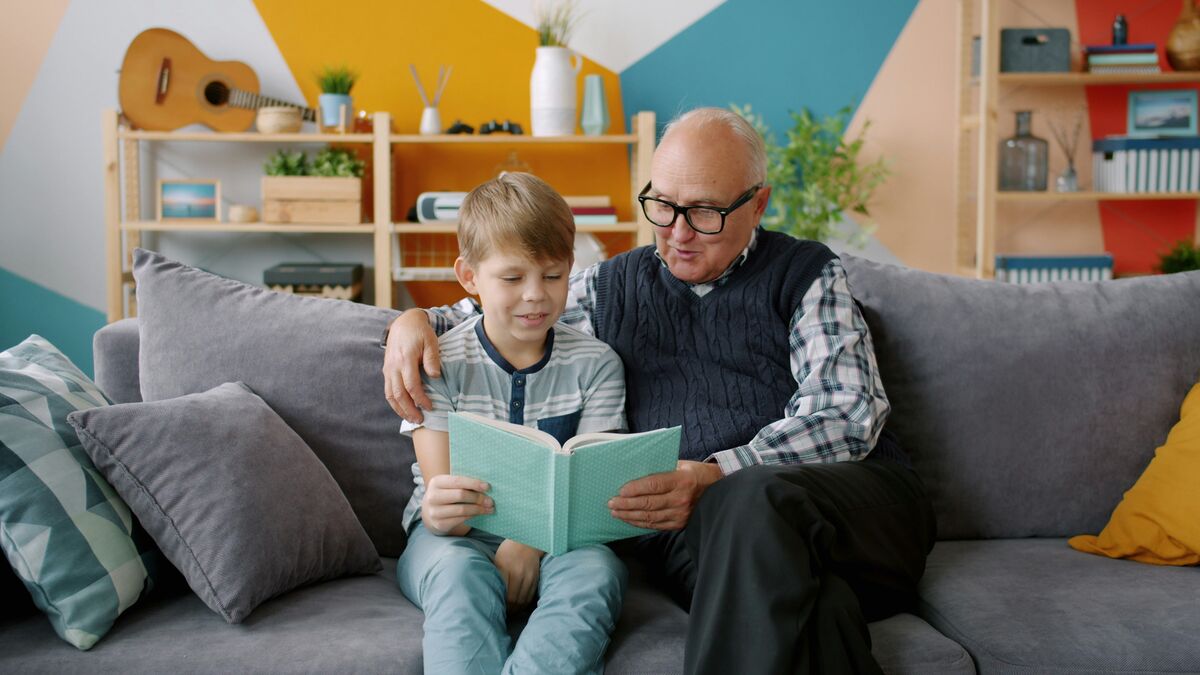
Of everything a family can do for a child's reading life, the oldest habit has the best evidence and the worst trendline. This month, Education Week reported on new research finding that parents are reading less to preschool-age children than before the pandemic — a survey of nearly 7,000 parents of three-to-five-year-olds found shared book reading dropped when COVID hit and simply never came back. It lands on top of a longer slide: a 2025 HarperCollins survey found only 41% of children aged 0–4 are read to daily or nearly daily, down from 64% in 2012. It gets worse as children grow — 36% of 5–7-year-olds, 22% of 8–10-year-olds — and worse for boys at every age. Just 40% of parents describe reading aloud as fun for them. Meanwhile teenagers just posted the worst reading scores ever measured. These facts are not unrelated. So consider this our September campaign, aimed squarely at our own community: bring back the read-aloud. Daily. Especially — especially — if your child has dyslexia.
Why are families reading aloud less?
The surveys point at converging causes: screens filling the wind-down hours that stories used to own, exhausted parents, and a generational shift in framing — younger parents are more likely to treat reading aloud as an educational task, like flash cards, than as shared pleasure. Once it's a chore, it's the first chore cut, and children read the signal perfectly: books are homework. There's also a quieter reason in families like ours: when a child struggles to read, everything involving books can start to hurt — for them and for you. The nightly battle over their reading practice swallows the part where you simply read to them. That's the piece worth rescuing first, because it's the part with no downside and no struggle in it.
Why does the read-aloud matter more for a dyslexic child?
Because reading comprehension is two systems, not one: decoding print, and understanding language. Dyslexia disrupts the first, not the second — and the read-aloud feeds the second directly, through a channel decoding trouble can't block. Every book you read to your child deposits vocabulary, background knowledge, sentence rhythms, and story structure into the account their comprehension will draw on for life — including the day their decoding, built through structured intervention, catches up to it. Book language is measurably richer than conversation, full of words and constructions dinner talk never uses. A dyslexic child who is read to daily arrives at every stage of intervention with more to connect print to. And the emotional ledger matters as much: twenty minutes a day where books mean closeness instead of struggle is the counterweight to every hard minute at school. It tells your child: the story world is yours, whatever your eyes are doing about it. (Our guide to talking about dyslexia pairs well here.)
How to run the daily read-together
- Pick a protected 20 minutes. Bedtime is classic; car rides and breakfast work. Same slot daily — the routine, not the willpower, does the lifting.
- You read; they don't have to. The read-aloud is a gift, not a lesson. Never force a struggling reader to perform aloud — that's the fastest way to poison the ritual.
- Follow their appetite, not their reading level. Listening comprehension outruns decoding by years in dyslexic kids. Read the dragon epic they can't yet decode. Series are rocket fuel.
- Talk, don't test. "I did not see that coming" beats "what was the main idea?" Conversation builds comprehension; quizzing builds dread.
- Keep it going long past 'too old.' The 22%-at-ages-8–10 statistic is exactly backwards for dyslexic kids — the middle-grade years are when ear-fed knowledge matters most. Read to your twelve-year-old.
- Let audio cover the gaps. On nights you can't, an audiobook holds the slot — free through Bookshare and Learning Ally for qualifying kids. Paired listening counts as together.
What to avoid
- Turning it into therapy. The moment the read-aloud becomes stealth decoding practice, you've lost the thing it uniquely provides. Intervention has its own slot; this one is for story.
- Trading it for the app's 'reading time.' An app tallying minutes is not a lap and a voice. As we argue in our piece on hands-on foundations, screens do access well and relationships poorly.
- Guilt as fuel. Missed a week? The streak doesn't matter; the default does. Start again tonight, no speeches.
- Waiting for them to ask. A child who's decided books equal failure won't request one. Start reading within earshot; the story does the recruiting.
Frequently asked questions
My child is 11 — isn't reading aloud to them babyish? No. Listening comprehension typically outpaces decoding into the teens, and for dyslexic students the gap is wider — reading aloud to older children delivers grade-level vocabulary and knowledge their eyes can't yet fetch. If the framing worries them, trade off chapters, or run a shared audiobook and discuss it.
Does listening together count, or does my child need to follow the text? Both modes count for different jobs. Pure listening builds vocabulary, knowledge, and love of story — that's the read-aloud's job. Following along in print supports word recognition and suits practice time. Don't let the tracking version crowd out the pleasure version.
Is 20 minutes really enough to matter? Daily consistency beats duration. Twenty minutes a day is over a hundred hours of rich language a year — on top of intervention, not instead of it — and it's the dose families sustain. More is lovely; daily is the point.
Source: "Parents Are Reading Less to Preschool-Age Kids at Home" — Education Week, Sep 2026 · "New research reveals that parents are losing the love of reading aloud" — HarperCollins, 2025 · "Teen reading slumps to worst this century" — U.S. News, Sep 8, 2026